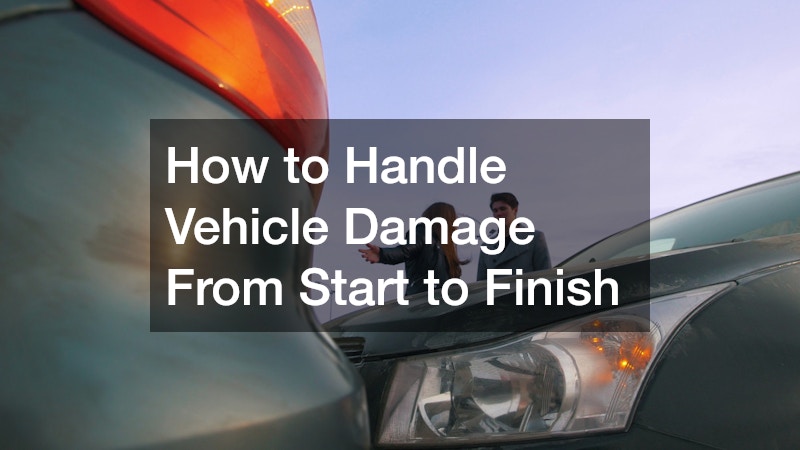
Vehicle damage can turn an ordinary drive into a stressful situation within seconds. Whether the damage results from a collision, road debris, severe weather, or another unexpected event, the decisions made immediately afterward can affect safety, repair quality, insurance claims, and future vehicle reliability.
A structured approach makes the situation easier to manage. Drivers should first address immediate hazards, then document what happened, report the incident, arrange professional inspections, and carefully review repairs before returning to normal driving. Some problems are obvious, such as a broken window or dented panel. Others, including alignment changes, sensor damage, and compromised structural components, may not be noticeable until a technician performs a detailed inspection.
Knowing what to expect throughout the process helps vehicle owners make informed decisions without overlooking important details.
Secure the Scene and Check for Immediate Safety Risks

Immediately after an auto accident, personal safety takes priority over the condition of the vehicle. Drivers should check themselves and their passengers for injuries and contact emergency services when necessary. If the vehicle is creating a traffic hazard and can be moved safely, local laws may permit or require moving it to a safer location.
Before driving away, examine the vehicle for conditions that could make continued operation dangerous. Warning signs include leaking fluids, smoke, damaged wheels, loose body panels, broken lights, unusual steering behavior, and deployed airbags.
A towing service may be appropriate when the vehicle has:
- Significant wheel, tire, or suspension damage
- Fluid leaking underneath it
- Steering or braking problems
- Extensive front-end or structural damage
- Broken lights that make driving unsafe
- Warning messages indicating serious mechanical problems
Damage can extend beyond what is visible from outside. A seemingly minor impact may affect steering, suspension, cooling components, or safety sensors. When there is uncertainty about whether a vehicle is roadworthy, transporting it rather than driving it can prevent additional damage and reduce safety risks.
Document Everything Before Leaving the Scene
Once immediate safety concerns have been addressed, thorough documentation becomes important. Photos should capture each vehicle from multiple angles as well as close-up images of damaged areas. When relevant, photograph lane markings, signs, traffic signals, debris, road conditions, and nearby landmarks.
Drivers should exchange required contact, vehicle, license, and insurance information. Witness names and contact details may also be useful. Writing down what happened soon after the incident can help preserve details that might otherwise be forgotten.
Useful information to record includes
- Approximate time and exact location: Record when the incident occurred as accurately as possible, along with the street name, intersection, highway, mile marker, or nearby landmark. Precise location details can make it easier to match your documentation with police, insurance, and witness records.
- Weather and road conditions: Note whether conditions involved rain, snow, ice, fog, darkness, construction, standing water, or other hazards. Include details about visibility and whether the pavement was dry, wet, icy, or otherwise difficult to navigate.
- Direction each vehicle was traveling: Write down the direction of travel for every vehicle involved, including which lanes they occupied. If relevant, note whether a vehicle was turning, merging, changing lanes, backing up, stopping, or entering an intersection immediately before the incident.
- Visible vehicle damage: Document the location and apparent severity of damage to each vehicle. Note dents, scratches, broken glass, damaged lights, leaking fluids, loose panels, wheel damage, or other visible problems, and support these observations with photographs from several angles.
- Names and contact information of witnesses: Ask independent witnesses for their full names and a reliable phone number or email address. Witnesses may be able to provide an outside account of what happened if drivers, insurers, or other parties later disagree about the circumstances.
- Police report or incident numbers, when applicable: If law enforcement responds, record the responding agency, officer information when available, and the report or incident number. This information can make it easier to request the official report and provide supporting documentation during the claims process.
Drivers should generally stick to factual observations rather than speculating about responsibility. If injuries, disputed liability, or complicated insurance issues develop, organized documentation may also help a car accident lawyer understand the circumstances and evaluate the available evidence.
Records should be stored together rather than scattered among text messages, emails, and paper documents. Creating a dedicated digital folder can simplify later communication.
Report the Incident and Understand the Claims Process
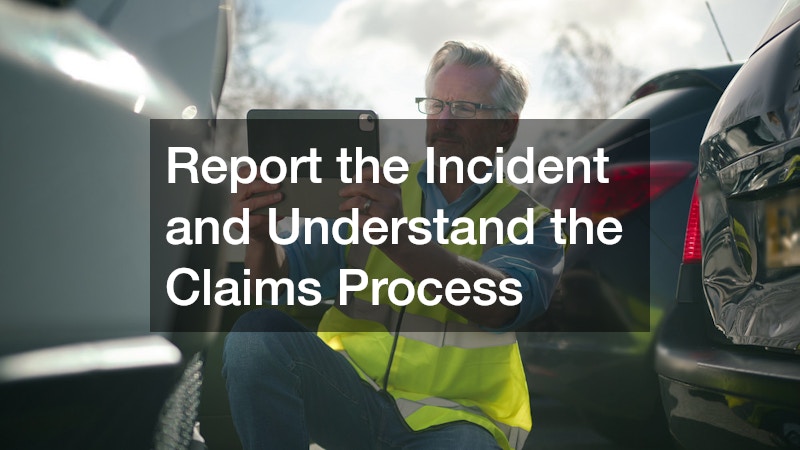
Insurance requirements and procedures vary by policy, insurer, and state, so vehicle owners should review their coverage and report qualifying incidents promptly. Contacting an auto insurance agency or the appropriate insurer can help clarify what documentation is needed and how the claim will proceed.
Depending on the circumstances and policy, relevant coverage may include collision, comprehensive, liability, uninsured or underinsured motorist protection, and rental reimbursement. A deductible may apply before certain benefits become available.
During the claims process, drivers may encounter several steps:
- Opening a claim and receiving a claim number
- Providing photographs and incident information
- Scheduling an inspection or submitting an estimate
- Communicating with an adjuster
- Receiving an initial repair assessment
- Addressing additional damage discovered during repairs
The first estimate may not identify everything. Once exterior panels are removed, technicians sometimes discover damaged brackets, sensors, structural components, or mechanical systems. These findings can result in a supplemental estimate.
Keep copies of estimates, claim correspondence, receipts, photographs, and approvals. Drivers should also understand their rights regarding repair facilities and replacement components, which can depend on applicable laws, insurance contracts, and individual claim circumstances.
Get a Thorough Inspection Before Authorizing Work
Selecting a qualified auto repair shop is one of the most important steps in restoring a damaged vehicle. Drivers should consider technician qualifications, experience with the vehicle make and model, available diagnostic equipment, warranties, and the facility’s ability to handle structural and electronic systems.
A complete inspection should look beyond scratches and dents. Modern vehicles integrate mechanical components with cameras, radar units, sensors, computers, and driver-assistance technology. An impact that leaves modest exterior damage could still alter wheel alignment or sensor positioning.
Professional car collision repairs may involve:
- Structural measurements and straightening
- Suspension or steering work
- Panel replacement or refinishing
- Mechanical repairs
- Diagnostic scanning
- Sensor inspection and calibration
- Wheel alignment
- Safety-system testing
Before authorizing work, review the written estimate carefully. It should describe planned repairs, labor, replacement components, refinishing work, and other anticipated charges.
Ask how unexpected damage will be handled. A reputable facility should communicate when additional work is discovered rather than proceeding with significant changes without appropriate authorization.
Evaluate Glass, Lighting, and Visibility Carefully

Glass and lighting problems deserve attention because they directly affect a driver’s ability to see and be seen. Inspect the front and rear glass, side windows, mirrors, headlights, brake lights, and turn signals.
Small chips may sometimes be repairable, while larger cracks or damage within critical viewing areas can require windshield replacements. The appropriate solution depends on the size, depth, position, and type of damage, along with applicable safety requirements.
Modern windshields may also support cameras or sensors used for lane departure warnings, automatic emergency braking, adaptive cruise control, and related systems. When glass containing or supporting this technology is replaced, calibration may be required to restore proper operation.
Before regular driving resumes, verify that:
- Visibility is unobstructed
- Mirrors are secure and properly adjusted
- Exterior lights function correctly
- Wipers operate normally
- Cameras and sensors have been checked when necessary
- No new cracks or leaks are present
Glass should not be treated as a purely cosmetic feature. Proper installation and functioning technology contribute to safe vehicle operation.
Make Informed Decisions About Replacement Components
Not every damaged component can be repaired. When replacement becomes necessary, drivers may encounter several categories of auto parts, including original equipment manufacturer components, aftermarket products, recycled components, and remanufactured parts.
Each category can have different considerations involving availability, fit, warranty terms, appearance, and compatibility. Rather than assuming one option is always best, drivers should ask what is included in the repair estimate and why it is being recommended.
Component selection deserves particular attention for systems involving:
- Airbags and occupant protection
- Bumpers and impact-related structures
- Cameras and radar sensors
- Headlights and electronic lighting
- Steering and suspension
- Cooling systems
- Electronic control modules
Some replacements require programming, scanning, or calibration after installation. For example, installing a new sensor does not necessarily mean the system is immediately ready for normal operation.
Vehicle owners should retain invoices and documentation identifying major components used during repairs. These records can be valuable when dealing with warranties, future service, or questions about previous damage.
Restore the Cabin and Address Interior Damage
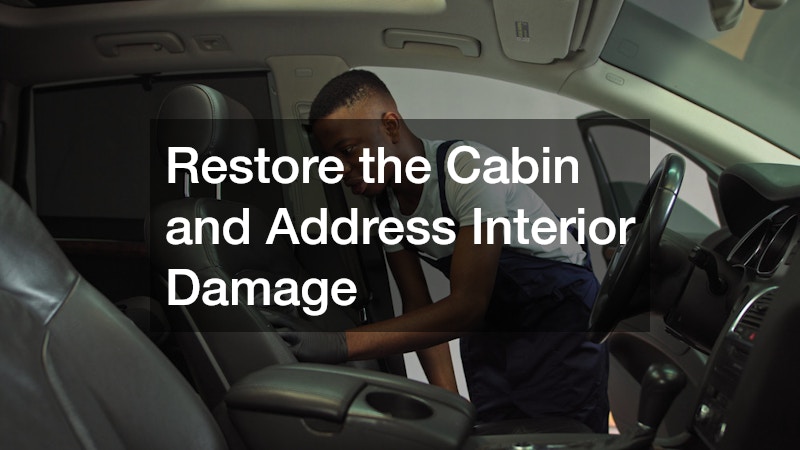
Exterior damage often receives the most attention, but the passenger compartment should also be inspected. Broken glass, moisture, deployed airbags, shifting cargo, and impact forces can damage seats, trim, carpeting, dashboards, and restraint systems.
Damaged car upholstery may sometimes be cleaned or repaired, while torn, heavily contaminated, or structurally affected materials may require replacement. The correct approach depends on the extent and type of damage.
Safety-related interior components require particular care. Seat belts and pretensioners may need inspection after a significant collision, even if they appear normal. Airbag deployment can also affect dashboard panels, steering components, seats, and interior trim.
If a window was broken and the vehicle was exposed to rain, moisture should be addressed quickly. Wet carpeting and padding can trap water underneath visible surfaces, creating persistent odors and potentially contributing to mold or corrosion.
The goal of interior restoration should be to return the cabin to safe, clean, functional condition rather than simply covering visible imperfections.
Inspect the Finished Work Before Accepting the Vehicle
When repairs are complete, vehicle owners should inspect the finished work before considering the process closed. Start by comparing the final invoice with earlier estimates and reviewing any supplemental work that was authorized.
Walk around the vehicle in good lighting. Look at panel alignment, paint consistency, trim placement, glass installation, and gaps around doors, the hood, and the trunk.
Next, test affected features. Depending on the repair, this might include windows, locks, mirrors, lights, cameras, climate controls, parking sensors, and infotainment functions.
Ask whether required diagnostic scans, wheel alignments, and safety-system calibrations were completed. Keep copies of supporting paperwork and warranty information.
During the first drives after repairs, pay attention to:
- Steering that pulls to one side
- New vibrations
- Warning lights
- Unusual wind or road noise
- Rattles or loose trim
- Changes in braking or handling
Concerns should be reported promptly. Small irregularities can sometimes indicate that an adjustment, calibration, or additional inspection is needed.
Protect Repaired Surfaces and Watch for Future Problems
After restoration, proper care can help preserve the finished work. Freshly refinished surfaces may have specific washing, waxing, or curing recommendations, so owners should follow the repair facility’s instructions.
Once appropriate for the repaired finish, PPF wraps can provide an additional protective layer over vulnerable painted areas. Paint protection film is commonly applied to locations exposed to road debris, such as hood edges, bumpers, mirrors, and rocker panels. It can help limit minor chips and scratches, although it does not make a vehicle immune to damage.
Routine inspections remain useful after repairs. Periodically check paint, tires, glass, trim, lights, and areas that were previously damaged. Regular washing can make chips, cracks, leaks, or loose components easier to notice.
Keep all repair records, photographs, warranties, and final invoices. A complete history can simplify future warranty discussions, maintenance decisions, insurance questions, and vehicle resale documentation.
Moving Forward With a Safe, Reliable Vehicle
Handling vehicle damage successfully requires more than scheduling cosmetic work. The process begins with protecting people at the scene and continues through documentation, claims, professional inspections, careful restoration, and a detailed final review.
Drivers who remain organized are better positioned to catch hidden problems, understand recommended work, and maintain useful records. They should also pay close attention to how the vehicle performs after it returns to the road. New warning lights, handling changes, unusual noises, or leaks deserve timely attention.
Ultimately, the objective is to restore more than appearance. A properly managed repair process should help return the vehicle to safe, dependable, and comfortable operation while giving its owner confidence that important mechanical, structural, electronic, and cosmetic concerns have been addressed.
About the Author